Mental Health and Sleep

When you buy through our links, we may earn a commission. Products or services may be offered by an affiliated entity. Learn more.

Mental Health and Sleep

Mental Health
Key Takeaways
  • Mental health impacts thoughts, feelings, and actions and influences our ability to handle stress, relate to others, and make choices.
  • Quality sleep is crucial for good mental health, but sleep issues can worsen mental health conditions, and mental health problems can lead to poor sleep.
  • Adhering to sleep hygiene practices can improve sleep quality and mental well-being.

Most people know firsthand that sleep affects their mental state. After all, there’s a reason it’s said that someone in a bad mood “woke up on the wrong side of the bed.”

As it turns out, there’s quite a bit of truth behind this colloquial saying. Sleep is closely connected to mental and emotional health and has demonstrated links to depression, anxiety, bipolar disorder, and other conditions.

Research is ongoing to better understand the bidirectional relationship between mental health and sleep. Both are complex issues affected by a multitude of factors, but, given their close association, there is strong reason to believe that improving sleep can have a beneficial impact on mental health and can be a component of treating many psychiatric disorders.

How Is Mental Health Related to Sleep?

Brain activity fluctuates during sleep, increasing and decreasing during different sleep stages that make up the sleep cycle. Each stage plays a role in brain health, allowing activity in different parts of the brain to ramp up or down and enabling better thinking, learning, and memory. Research has also uncovered that brain activity during sleep has profound effects on emotional and mental health.

Sufficient sleep, especially rapid eye movement (REM) sleep, facilitates the brain’s processing of emotional information. During sleep, the brain works to evaluate and remember thoughts and memories, and it appears that a lack of sleep is especially harmful to the consolidation of positive emotional content. This can influence mood and emotional reactivity and is tied to mental health disorders and their severity, including the risk of suicidal ideas or behaviors.
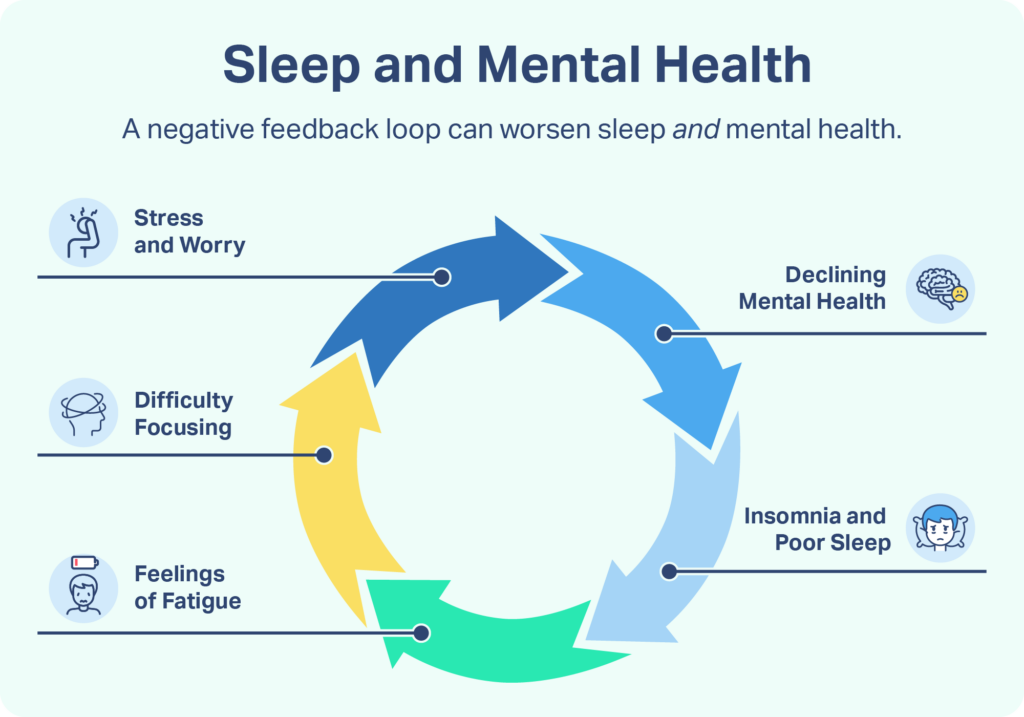
Sleep and mental health can exacerbate each other in a loop.

As a result, the traditional view, which held that sleep problems were a symptom of mental health disorders, is increasingly being called into question. Instead, it is becoming clear that there is a bidirectional relationship between sleep and mental health in which sleeping problems may be both a cause and consequence of mental health problems. Further research is needed to identify the diverse connections between sleep and mental health as well as how their multifaceted relationship can be influenced by numerous factors in any specific person’s case.

Obstructive sleep apnea (OSA) is another aspect of sleep that has been linked to mental health. OSA is a disorder that involves pauses in breathing during sleep and a reduction in the body’s oxygen levels, creating fragmented and disturbed sleep. OSA occurs more frequently in people with psychiatric conditions and may detract from their physical health and heighten their risk of serious mental distress.

 

  •  

  • A young woman is sitting on a sofa staring out of the window and enjoying a hot drink at home in the living room.

    Maladaptive Daydreaming

  • man laying in bed experiencing a nocturnal panic attack

    Nocturnal Panic Attack

  • A man with Somniphobia sittting on edge of bed

    Somniphobia: Understanding the Fear of Sleep

  • A couple in bed facing away from each other

    Sleep Talking: What Is Somniloquy?

Sleep and Specific Mental Health Problems

The way that sleep and mental health are intertwined becomes even more apparent by reviewing what is known about how sleep is tied to a number of specific mental health conditions and neurodevelopmental disorders.

  • student trying to focus at school

    ADHD & Sleep Problems

  • woman worrying on couch

    Anxiety and Sleep

  • A depressed woman sits on the floor in a bedroom with her knees pulled to her chest

    Depression and Sleep

  • PTSD and Sleep

    PTSD and Sleep

  • Elderly couple at table working on a puzzle

    Dementia and Sleep

  • Woman laying in bed covering face

    Eating Disorders and Sleep

  • Couple holding hands in support

    Grief and Its Effect on Sleep

  • man sleeping in dark bedroom

    Trauma and Sleep

Ways To Improve Both Sleep and Mental Health

This multifaceted relationship between sleep and mental health makes for complex connections between sleep and psychiatric disorders, but it also means that treatment for both issues can go hand-in-hand. Steps to improve sleep may even form part of a preventive mental health strategy.

Every individual’s situation is different, so the optimal treatment for mental health and sleep problems depends on the person. Because these conditions can have a major impact on quality of life, it’s important to receive proper care, which entails working with a trained health professional.

A medical doctor or psychiatrist can review the potential benefits and risks of different types of treatments and provide tailored care – even in situations with multiple co-occurring physical or mental health issues.