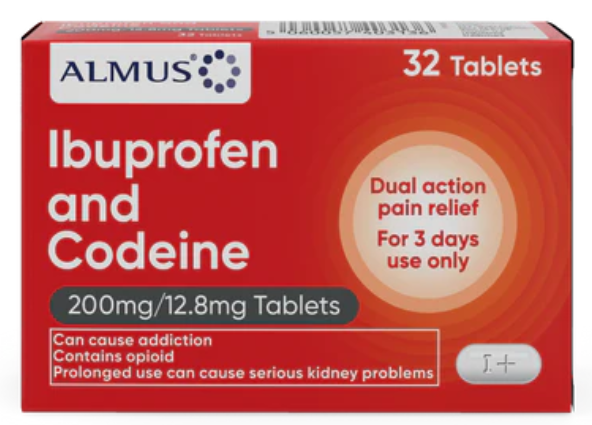
What is Almus Ibuprofen & Codeine 200 mg/12.8 mg
Almus Ibuprofen & Codeine combines two active ingredients:
-
Ibuprofen (200 mg) — a non‑steroidal anti‑inflammatory drug (NSAID) that reduces inflammation, swelling, and pain. patient-info.co.uk+1
-
Codeine phosphate (12.8 mg) — a weak opioid analgesic; once metabolized in the body, a portion becomes morphine, which helps reduce pain signals in the brain and central nervous system. patient-info.co.uk+1
This combination is designed to offer enhanced pain relief by attacking pain via two complementary mechanisms: ibuprofen addresses inflammation and peripheral pain, while codeine provides central pain relief.
Almus Ibuprofen & Codeine tablets are generally intended for short‑term use, typically when simpler painkillers (like ibuprofen or paracetamol alone) are insufficient. Health Pharmacy+2tabihealth.com+2
Main Therapeutic Uses
This combination is commonly used to treat moderate acute pain in adults (and children over 12 years, depending on local guidelines) such as: Medicines.org.uk+2Curely+2
-
Musculoskeletal and rheumatic pain — including sprains, strains, back pain, joint pain, and general muscle aches. Acer Pharmacy+1
-
Headache and migraine — especially when over‑the-counter analgesics alone do not provide sufficient relief. medino+1
-
Dental pain or toothache — where inflammation and nerve pain may both be involved. tabihealth.com+1
-
Period pain (dysmenorrhea) — for women experiencing moderate to severe cramp and associated discomfort. tabihealth.com+1
-
Neuralgia or nerve‑related pain — when nerves and inflammation both contribute to pain intensity. patient-info.co.uk+1
In essence, Almus Ibuprofen & Codeine is often chosen when pain is more severe or when inflammation complicates the pain — situations where a dual‑action medication may be more effective than a simple painkiller.
Benefits and Advantages
1. Dual‑Mechanism Pain Relief — Greater Efficacy
Because the drug combines an NSAID (ibuprofen) and an opioid (codeine), it targets multiple aspects of pain. Ibuprofen reduces inflammation, swelling, and prostaglandin-mediated pain, while codeine modifies pain perception centrally. This can result in stronger, more comprehensive relief than either component alone. patient-info.co.uk+2hightownpharmacy.co.uk+2
For many people, this means relief from pain that was previously unmanageable with standard over‑the-counter painkillers — for example, a bad backache with inflammation, or a severe dental pain with nerve involvement.
2. Versatility — Covers a Wide Range of Pain Types
The combination is useful for various types of pain: musculoskeletal, dental, menstrual, neuralgic, headache or migraine. Because of its broad applicability, Almus Ibuprofen & Codeine can serve as a general-purpose “step-up” pain medication for moderate pain when simpler analgesics are insufficient. Health Pharmacy+2tabihealth.com+2
3. Faster and More Reliable Relief for Acute Pain
For acute pain conditions — such as a sprained ankle, sudden severe headache, or dental procedure — the dual-action effect often produces faster, more noticeable relief. The ibuprofen helps reduce inflammation and swelling while codeine helps calm nerve-related pain — together they can ease discomfort more rapidly than single-agent analgesics. Acer Pharmacy+2tabihealth.com+2
4. Useful When Simpler Painkillers Fail
Sometimes, over‑the-counter options like plain ibuprofen, aspirin or paracetamol may not sufficiently relieve pain or may be contraindicated. In those cases, Almus Ibuprofen & Codeine provides a stronger alternative before escalating to stronger opioids or prescription-only pain medications. NPS Australia+1
5. Short‑Term Use with Effective Dose Management
Almus Ibuprofen & Codeine is typically recommended for short-term treatment only (often up to 3 days) for acute pain episodes. Medicines.org.uk+2Online Pharmacy 4U+2 Because of this, under appropriate medical guidance, it can provide temporary but effective relief without long-term drug exposure. The lower opioid dose (codeine 12.8 mg) helps reduce, though not eliminate, the risks associated with opioids when used responsibly.
Responsible Use and Considerations
While the benefits are significant, it’s critical to emphasize that this medication must be used responsibly and only as directed:
-
Because codeine is an opioid, repeated or prolonged use can lead to tolerance, dependence, or addiction. The prescribing information warns against use beyond short-term durations. Medicines.org.uk+2HPRA Assets+2
-
NSAID-related risks: Ibuprofen may irritate the stomach lining, increase the risk of ulcers or gastrointestinal bleeding, especially if used frequently or combined with other NSAIDs or alcohol. patient-info.co.uk+2Acer Pharmacy+2
-
Potential kidney or metabolic issues: Regulatory bodies have flagged risks of serious kidney or gastrointestinal harms when combining ibuprofen and codeine if taken at high doses or for prolonged periods. EL PAÍS English+2Defence Housing Authority+2
-
Sedation and other opioid side effects: Codeine can cause drowsiness, dizziness, nausea, constipation, or respiratory depression — especially if combined with other central nervous system depressants (e.g., alcohol, sedatives). Medicines.org.uk+1
Because of these risks, Almus Ibuprofen & Codeine is best for short-term, occasional use — for acute episodes of moderate pain where shorter or milder painkillers don’t suffice. Under no circumstances should it be used as a long-term pain management solution without close medical supervision.
Why Some People Choose Almus Ibuprofen & Codeine
-
They experience intense or combined inflammatory + neuropathic pain (e.g., severe backache with inflammation, dental pain, or period pain) that doesn’t respond well to simple NSAIDs or painkillers.
-
They need fast, effective relief to restore daily function — for example, to sleep at night, go to work, or eat and drink without debilitating pain.
-
They prefer a single medication to cover multiple pain mechanisms, rather than juggling multiple drugs (NSAID + opioid).
-
They want a temporary “step-up” option before considering stronger prescription opioids or more intensive pain management.