What are Nembutal, Thiopental, and Pentothal? Understanding the Barbiturate Anesthetics
The names Nembutal, Thiopental, and Pentothal often appear together in medical discussions, historical contexts, and media narratives. While distinct, all three substances belong to the class of drugs known as barbiturates—powerful central nervous system (CNS) depressants primarily used as anesthesia induction agents.Nembutal drug uses
Understanding these drugs requires clarifying their specific classifications, actions, and uses.
The Barbiturate Family
Barbiturates are non-selective CNS depressants that produce effects ranging from mild sedation to general anesthesia and coma, depending on the dose. They work by enhancing the action of GABA (gamma-aminobutyric acid), the main inhibitory neurotransmitter in the brain, effectively slowing down brain activity.
1. Nembutal (Pentobarbital)
Nembutal is the brand name for the drug pentobarbital.
Pharmaceutical Profile:
- Classification: Short-acting barbiturate.
- Primary Medical Use: Historically used to treat insomnia, seizure control, and anxiety. Today, its primary clinical use is often sedation for surgical procedures, hospice care, or managing acute seizures.
- Key Feature: Pentobarbital has a longer duration of action compared to Thiopental, placing it in the “short-intermediate” category.
- Controlled Substance Status: Generally classified as a Schedule II controlled substance in the U.S. due to its high potential for abuse and dependence.
2. Thiopental and Pentothal: A Brand Name Clarification
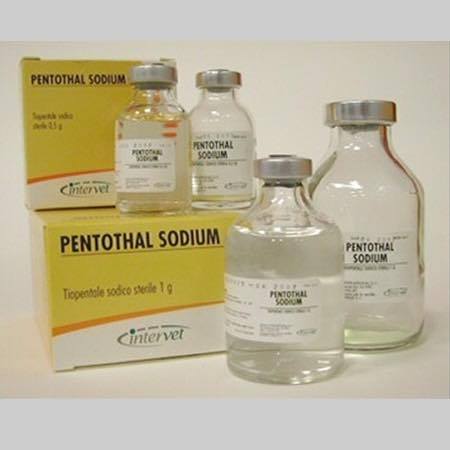
Thiopental is the generic name of the drug. Pentothal (or Pentothal Sodium) is the highly recognized trade name originally manufactured for Thiopental. For practical purposes in historical and general discussions, “Thiopental” and “Pentothal” refer to the same chemical compound.
Pharmaceutical Profile:
- Classification: Ultra-short-acting barbiturate.
- Primary Medical Use: Thiopental is a rapid-onset depressant, making it the classic induction agent for general anesthesia. It is administered intravenously to quickly render a patient unconscious before the administration of longer-acting agents.
- Mechanism: Its ultra-short action is due to rapid redistribution from the brain to other body tissues and fat, allowing the anesthetic effect to wear off quickly unless continuous infusion is used.
- Historical Significance: For decades following its introduction in the 1930s, Pentothal was the gold standard for anesthesia induction globally.
Medical and Historical Context
While all three drugs are effective CNS depressants, their speed of action dictates their primary roles:
| Drug Name | Generic Name | Speed of Action | Primary Use |
|---|---|---|---|
| Pentothal | Thiopental Sodium | Ultra-Short | Rapid Anesthesia Induction |
| Nembutal | Pentobarbital | Short-Intermediate | Sedation, Seizure Control |
The development of newer, safer anesthetic agents (like Propofol) has significantly reduced the use of Thiopental and Pentobarbital in many operating rooms, yet they remain essential tools in specific medical and veterinary contexts.Nembutal drug uses
Legal and Ethical Concerns
Due to their potency and ability to induce unconsciousness and respiratory depression, these barbiturates are strictly regulated. They have also been historically associated with controversial applications, including use as a component in lethal injection protocols and the administration of “truth serum” (a non-scientific application based on the drug’s ability to lower inhibitions, though its reliability for obtaining truth is highly questioned).
In clinical settings, Nembutal and Pentothal are powerful medications that require precise dosage and careful monitoring due to the narrow therapeutic window between sedation and life-threatening respiratory failure.Nembutal drug uses